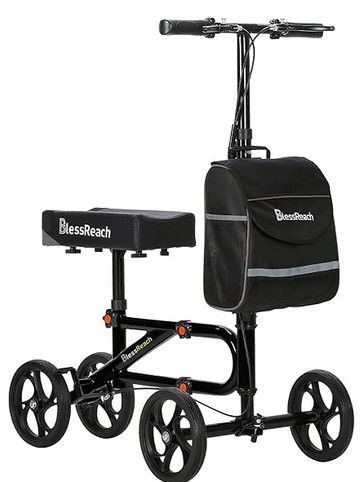
Knee Scooter
A knee scooter helps you stay mobile while keeping weight off your injured foot or ankle. It is a common alternative to crutches when your surgeon or physical therapist approves it.
Prepared by Recovery ReadyRecovery Ready— physical therapists with 30+ years of experience helping patients prepare for and optimally recover from surgery.
Last reviewed: 2026-06-12
Important considerations
- Do not use a knee scooter unless your care team has cleared you for this device.
- Avoid stairs, uneven ground, and wet surfaces unless your therapist has trained you.
- Stop using it if you feel dizzy, unstable, or have increased pain or swelling.
- Follow weight-bearing restrictions exactly as prescribed after surgery or injury.
How to use
- Adjust the handlebar height so your arms are slightly bent and your shoulders stay relaxed.
- Place your injured leg on the padded knee platform with your knee centered and your foot hanging behind the pad.
- Use your strong leg to push forward in small, controlled movements on level, dry surfaces.
- Turn slowly by steering the front wheel; avoid sharp turns until you feel steady.
- Use brakes before sitting down, standing up, or navigating slopes and door thresholds.
- Follow your surgeon or PT guidance on how long you may use the scooter each day.
Tips & tricks
- Keep pathways clear of rugs, cords, and clutter to reduce trip risk.
- Wear supportive, closed-toe shoes on your non-injured foot for better balance.
- Practice getting on and off the scooter near a sturdy chair or counter for support.
- Carry items in a small backpack or basket rather than in your hands while scooting.
Good to know
- Many patients find knee scooters easier on the upper body than crutches for longer distances.
- Indoor use on smooth floors is usually easiest when you are first learning.
- Your therapist can help you decide when to transition back to walking aids.
Frequently asked questions
Can I use a knee scooter right after surgery?▾
Only if your surgeon or physical therapist says it is appropriate for your procedure and weight-bearing status. Always follow their specific instructions.
Is a knee scooter better than crutches?▾
It depends on your balance, strength, and recovery plan. Some patients prefer a scooter for longer indoor trips; your PT can help you choose the safest option.
Can I use a knee scooter right after surgery?
Only if your surgeon or physical therapist says it is appropriate for your procedure and weight-bearing status. Always follow their specific instructions.
Is a knee scooter better than crutches?
It depends on your balance, strength, and recovery plan. Some patients prefer a scooter for longer indoor trips; your PT can help you choose the safest option.