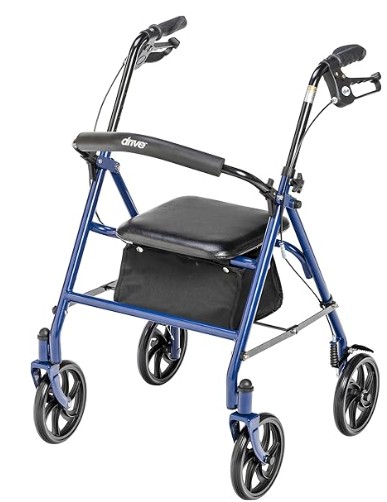
Rollator
A rollator provides a stable frame with wheels and a built-in seat for rest breaks during walking. It can support safer mobility when your surgeon or PT recommends a wheeled walker.
Prepared by Recovery ReadyRecovery Ready— physical therapists with 30+ years of experience helping patients prepare for and optimally recover from surgery.
Last reviewed: 2026-06-12
Important considerations
- Do not use a rollator on stairs or escalators.
- Avoid using the seat on inclines, uneven ground, or when brakes are not secure.
- Stop if you feel unsteady, short of breath, or have new pain in your surgical area.
- Follow any weight-bearing or arm-movement limits from your surgeon or PT.
How to use
- Adjust handle height so your elbows are slightly bent when standing upright.
- Walk inside the frame and push it forward with each step, keeping the rollator close to your body.
- Engage brakes before sitting on the seat or when standing on slopes.
- Turn by guiding the frame slowly; avoid twisting your trunk beyond your comfort zone.
- Use the seat only on level ground and only when brakes are fully locked.
- Follow your care team's guidance on distance, terrain, and when to use the seat.
Tips & tricks
- Look ahead, not down at your feet, to keep your posture upright.
- Wear supportive shoes with good traction on your walking surface.
- Keep the storage pouch light so the rollator does not tip when you lean on it.
- Practice locking brakes with one hand if your therapist recommends it.
Good to know
- Rollators are helpful when you need periodic rest during longer walks.
- Many models fold for transport, which can make clinic visits easier.
- Your therapist can teach a safe sit-to-stand pattern using the rollator handles.
Frequently asked questions
When should I use the seat on my rollator?▾
Use it for short rest breaks on flat, stable ground with brakes locked. Ask your PT how often resting is appropriate during your recovery.
Can I push someone in a rollator seat?▾
No. The seat is designed for the person using the device, not as a transport chair for another person.
When should I use the seat on my rollator?
Use it for short rest breaks on flat, stable ground with brakes locked. Ask your PT how often resting is appropriate during your recovery.
Can I push someone in a rollator seat?
No. The seat is designed for the person using the device, not as a transport chair for another person.