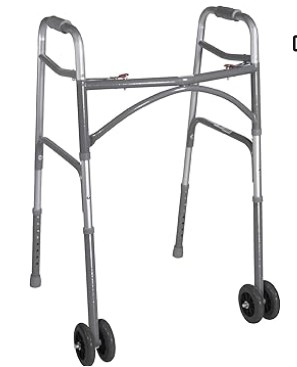
Bariatric Folding Walker
A bariatric folding walker offers a wider, sturdier frame for supported walking during orthopedic recovery. It is designed for users who need extra stability and weight capacity as cleared by their care team.
Prepared by Recovery ReadyRecovery Ready— physical therapists with 30+ years of experience helping patients prepare for and optimally recover from surgery.
Last reviewed: 2026-06-12
Important considerations
- Do not use on stairs unless your therapist has trained you on a specific method.
- Avoid carrying heavy items in both hands while using the walker.
- Stop if you feel lightheaded, unstable, or have sharp surgical pain.
- Follow weight-bearing restrictions from your surgeon at all times.
How to use
- Unfold the walker and confirm all locking buttons or hinges click into place.
- Adjust handle height so your elbows bend slightly when your hands are on the grips.
- Walk with the walker ahead of you, stepping into it rather than pushing it far forward.
- Move the walker one step at a time on level surfaces until your pattern feels natural.
- Use a step-to or step-through pattern as taught by your physical therapist.
- Fold and store only when not in use, keeping pathways clear at home.
Tips & tricks
- Wear supportive, non-slip shoes during all walking practice.
- Keep the walker close to maintain upright posture and better balance.
- Add glide caps or wheels only if your therapist recommends them for your setup.
- Inspect the frame periodically for loose hardware or worn tips.
Good to know
- Bariatric frames provide more room and stability for larger body sizes.
- Folding models can be easier to transport to appointments.
- Your PT can progress you from walker to a cane when your strength improves.
Frequently asked questions
Is a bariatric walker different from a standard walker?▾
Yes. It typically has a wider frame and higher weight capacity. Your care team can confirm it is appropriate for your needs.
When can I stop using the walker?▾
That decision belongs to your surgeon and PT based on strength, balance, and your surgical protocol.
Is a bariatric walker different from a standard walker?
Yes. It typically has a wider frame and higher weight capacity. Your care team can confirm it is appropriate for your needs.
When can I stop using the walker?
That decision belongs to your surgeon and PT based on strength, balance, and your surgical protocol.