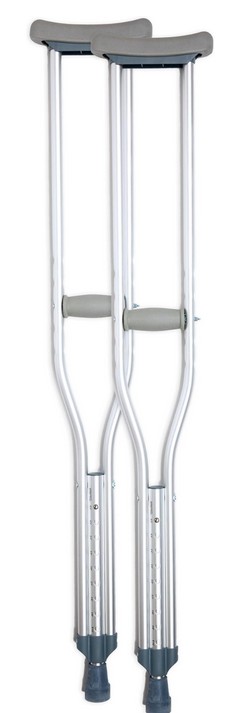
Crutches
Crutches help transfer weight away from an injured or surgically repaired leg. Proper fit and technique are essential, so follow training from your surgeon or physical therapist.
Prepared by Recovery ReadyRecovery Ready— physical therapists with 30+ years of experience helping patients prepare for and optimally recover from surgery.
Last reviewed: 2026-06-12
Important considerations
- Never rest your body weight on the tops of the crutches under your arms.
- Do not begin crutch walking without clearance and training from your care team.
- Stop if you have numbness in your hands, armpit pain, or increasing leg symptoms.
- Follow all weight-bearing limits until your surgeon changes them.
How to use
- Adjust crutch height so handgrips align with your wrist crease when standing upright.
- Place crutches slightly ahead and out to the sides, moving them together with your affected leg.
- Keep weight through your hands and arms, not through your armpits.
- Take small steps on level ground until your therapist approves longer distances.
- Use a non-weight-bearing, partial, or weight-bearing pattern only as prescribed.
- Sit and stand using a stable chair and the technique your PT demonstrated.
Tips & tricks
- Add cushioned hand grips or pad covers if recommended for comfort.
- Wear shoes with good traction and avoid loose slippers.
- Clear hallways and keep frequently used items at waist height.
- Practice stairs only after hands-on instruction from your therapist.
Good to know
- Crutches are often used early after foot, ankle, or knee procedures.
- Correct height reduces shoulder and wrist strain during recovery.
- Your PT will usually advance you to one crutch or a cane when ready.
Frequently asked questions
How do I know if my crutches fit correctly?▾
When standing, there should be about two finger widths between your armpit and the crutch pad, with handgrips at wrist level. Your PT can check your fit.
Can I climb stairs on crutches?▾
Only after your physical therapist teaches you a safe pattern for up and down. Do not attempt stairs on your own without instruction.
How do I know if my crutches fit correctly?
When standing, there should be about two finger widths between your armpit and the crutch pad, with handgrips at wrist level. Your PT can check your fit.
Can I climb stairs on crutches?
Only after your physical therapist teaches you a safe pattern for up and down. Do not attempt stairs on your own without instruction.