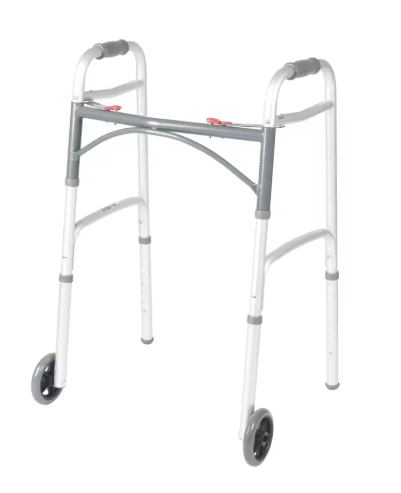
Rolling Walker
A rolling walker moves smoothly on wheels while giving you a stable frame for balance. It is commonly used when your surgeon or PT wants more mobility than a standard walker provides.
Prepared by Recovery ReadyRecovery Ready— physical therapists with 30+ years of experience helping patients prepare for and optimally recover from surgery.
Last reviewed: 2026-06-12
Important considerations
- Do not use on stairs or steep ramps without specific training.
- Avoid leaning your full body weight on the frame while moving unless instructed.
- Stop if you feel unsteady or have increased swelling or pain after walking.
- Follow weight-bearing and arm-use restrictions from your care team.
How to use
- Adjust handles so your elbows stay slightly bent when standing tall.
- Engage brakes before you sit, stand, or position yourself at a chair or toilet.
- Walk with the walker close to your body, pushing it forward in controlled steps.
- Practice turning slowly and avoiding quick direction changes indoors first.
- Use only the brake pattern and wheel setup your therapist recommends.
- Follow prescribed distance limits as your endurance improves.
Tips & tricks
- Look forward to maintain upright posture and better balance.
- Keep floors dry and remove small rugs that can catch wheels.
- Do not overload bags hanging on the walker; it can affect stability.
- Check wheel locks and glide surfaces regularly for wear.
Good to know
- Rolling walkers can reduce the lift-and-place effort of a standard walker.
- Many patients use them indoors during the middle phase of recovery.
- Your PT will guide when to transition to a cane or independent walking.
Frequently asked questions
Do I need to lock the brakes every time I stop?▾
Lock brakes when standing still on slopes or when moving to sit. Your PT can clarify when full locking is needed in your home.
Can I use a rolling walker outside?▾
Often yes on smooth, dry pavement once your therapist approves. Uneven or wet terrain may require a different aid.
Do I need to lock the brakes every time I stop?
Lock brakes when standing still on slopes or when moving to sit. Your PT can clarify when full locking is needed in your home.
Can I use a rolling walker outside?
Often yes on smooth, dry pavement once your therapist approves. Uneven or wet terrain may require a different aid.