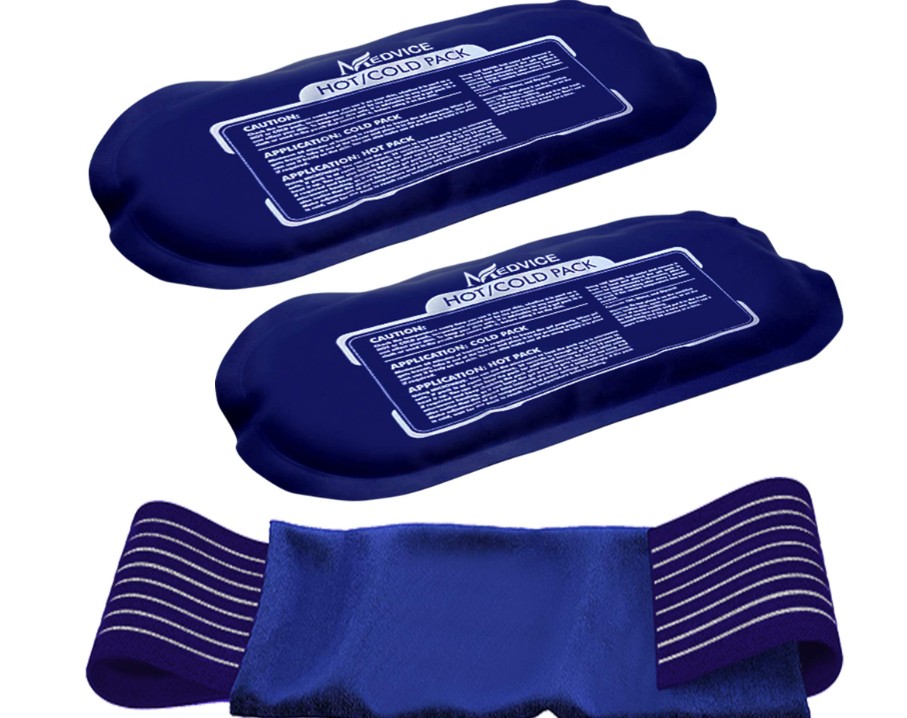
Cold Pack Wrap
A cold pack wrap lets you apply controlled cold therapy around a joint or surgical area. Use only if your surgeon or physical therapist included icing in your recovery plan.
Prepared by Recovery ReadyRecovery Ready— physical therapists with 30+ years of experience helping patients prepare for and optimally recover from surgery.
Last reviewed: 2026-06-12
Important considerations
- Do not ice through numb skin or over areas without normal sensation.
- Stop if you see pale, blotchy, or painful skin reactions.
- Avoid icing if your surgeon prohibited cold therapy for your procedure.
- Do not sleep with a cold wrap unless explicitly directed by your care team.
How to use
- Place a thin cloth barrier between your skin and the cold pack unless your product instructions say otherwise.
- Wrap snugly enough to stay in place without compressing circulation.
- Apply for the time your care team recommended, often 15–20 minutes per session.
- Remove the wrap completely between sessions to let skin warm up.
- Store the pack in the freezer between uses per manufacturer guidance.
- Log icing times if your home program requests it.
Tips & tricks
- Elevate the limb while icing if your therapist advises it for swelling control.
- Keep an extra cloth handy in case the first layer gets damp from condensation.
- Check skin color and sensation a few minutes into each session.
- Use a timer so sessions do not run too long.
Good to know
- Cold therapy is commonly used in the first days to weeks after joint surgery.
- A wrap can be easier than holding an ice pack in place on your own.
- Your therapist may reduce icing frequency as swelling improves.
Frequently asked questions
How often should I use the cold pack wrap?▾
Only as often as your surgeon or PT prescribed. Schedules vary by surgery type and healing stage.
Can I wrap it directly on my incision?▾
Follow your surgical team's dressing and icing rules. Many plans avoid direct contact over fresh incisions.
How often should I use the cold pack wrap?
Only as often as your surgeon or PT prescribed. Schedules vary by surgery type and healing stage.
Can I wrap it directly on my incision?
Follow your surgical team's dressing and icing rules. Many plans avoid direct contact over fresh incisions.