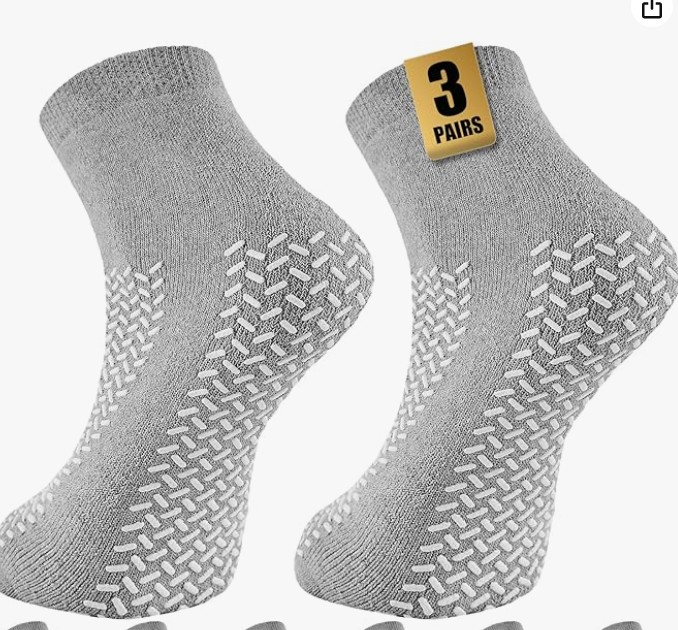
Non-Slip Socks
Non-slip socks add grip on smooth floors, which can help reduce slip risk when you are walking without shoes during recovery. They support safer indoor mobility as part of your home safety plan.
Prepared by Recovery ReadyRecovery Ready— physical therapists with 30+ years of experience helping patients prepare for and optimally recover from surgery.
Last reviewed: 2026-06-12
Important considerations
- Non-slip socks do not replace balance training or assistive devices when those are prescribed.
- Do not use if you have foot wounds or circulation concerns unless your clinician approves.
- Stop if you notice increased stumbling; tell your PT so your gait plan can be reviewed.
- Follow weight-bearing limits regardless of footwear choice.
How to use
- Choose a size that fits snugly without squeezing toes or restricting circulation.
- Put socks on before standing from bed or a chair if your therapist recommends gripped footwear indoors.
- Walk on dry indoor surfaces and check that grip dots or tread make contact with the floor.
- Replace socks when tread becomes worn or the fabric stretches out.
- Pair with a walker or cane if your care plan still requires an assistive device.
- Remove socks before showering unless you have a shower-safe version approved by your team.
Tips & tricks
- Keep bedroom and bathroom floors free of clutter and spills.
- Have a second pair available so one can be washed while you wear the other.
- Use nightlights for paths you walk in the dark.
- Avoid socks alone on wet tile; dry feet and floor first.
Good to know
- Many patients wear gripped socks at home during early recovery from hip or knee surgery.
- They can be especially helpful on hardwood or laminate flooring.
- Your therapist may suggest them alongside a structured home safety review.
Frequently asked questions
Are non-slip socks enough instead of shoes indoors?▾
For some patients during early recovery, yes—if your PT agrees. Others still need supportive shoes; follow your personal plan.
Can I sleep in non-slip socks?▾
Usually not required unless your care team suggests it for nighttime bathroom trips. Comfort and circulation matter—ask if unsure.
Are non-slip socks enough instead of shoes indoors?
For some patients during early recovery, yes—if your PT agrees. Others still need supportive shoes; follow your personal plan.
Can I sleep in non-slip socks?
Usually not required unless your care team suggests it for nighttime bathroom trips. Comfort and circulation matter—ask if unsure.