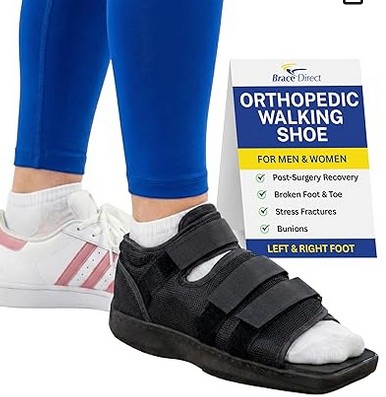
Cast Shoe (Boot)
A cast shoe, sometimes called a cast boot, fits over a cast or walking boot to protect it and improve walking safety. Use it according to your surgeon or physical therapist instructions.
Prepared by Recovery ReadyRecovery Ready— physical therapists with 30+ years of experience helping patients prepare for and optimally recover from surgery.
Last reviewed: 2026-06-12
Important considerations
- Do not walk without the cast shoe if your surgeon required protected ambulation.
- Stop if you develop new pressure spots, numbness, or foul odor from the cast area.
- Avoid uneven terrain until your care team clears more active walking.
- Follow all weight-bearing restrictions regardless of footwear.
How to use
- Open the shoe wide and slide your cast or boot in without forcing a tight fit.
- Secure straps or Velcro so the shoe stays on but does not squeeze the cast edges.
- Stand and take a few test steps on level ground before longer walks.
- Check that the sole is intact and provides even contact with the floor.
- Remove the shoe when resting if your care team allows, to inspect skin at cast edges.
- Replace or adjust if the cast thickness changes after a cast swap.
Tips & tricks
- Keep the shoe dry; use a cast shower cover for bathing if prescribed.
- Trim loose strap ends so they do not catch while walking.
- Wear the shoe on both feet only if your therapist recommends limb-length balancing.
- Inspect tread regularly for wear on the non-injured side if used as a pair.
Good to know
- Cast shoes help shield the bottom of a cast from dirt and damage.
- They can improve traction compared with walking on a smooth cast surface.
- Your team will tell you when you can transition out of the cast and shoe.
Frequently asked questions
Do I need a cast shoe for a walking boot too?▾
Many walking boots have their own sole, but some setups still use an over-shoe for protection. Follow your surgeon's specific guidance.
What if the cast shoe feels too tight after swelling changes?▾
Loosen straps slightly if safe, and contact your clinic if fit is uncomfortable or circulation symptoms appear.
Do I need a cast shoe for a walking boot too?
Many walking boots have their own sole, but some setups still use an over-shoe for protection. Follow your surgeon's specific guidance.
What if the cast shoe feels too tight after swelling changes?
Loosen straps slightly if safe, and contact your clinic if fit is uncomfortable or circulation symptoms appear.